
Independent advice for interior fit-out and custom cabinetmaking companies
Improving profitability does not always start with a new machine.
Sometimes the greatest gains come from better production planning, clearer scheduling, less internal transport or smarter use of existing resources. VLECAD® maps your operations and turns bottlenecks into practical improvements.
Practical, independent and tailored to your company.
Working hard is not the same as having control
Many owners of interior fit-out companies remain closely involved with customers, production planning and machinery. This is a strength, but it can make it difficult to step back and assess the entire operation.
Meanwhile, small losses pile up:
- information is entered several times;
- machines waiting for material or decisions;
- experienced employees solve the same exceptions over and over again;
- offcuts and stock are not fully visible;
- scheduling relies mainly on individual knowledge or separate lists;
- investments are assessed without full insight into actual capacity.
A business analysis makes these patterns visible. Not to change everything at once, but to determine which intervention can make the most difference first.
What can we investigate together?
Every assignment starts with your specific question. Depending on the situation, we examine one part in depth or we map out the entire operation together.
Design and production planning
Where is information re-entered? Which standards are missing? How does a change from customer demand to production proceed?
Production and machine use
Where do waiting times, detours or manual hand-offs occur? Is the machinery being used for the work where it adds the most value?
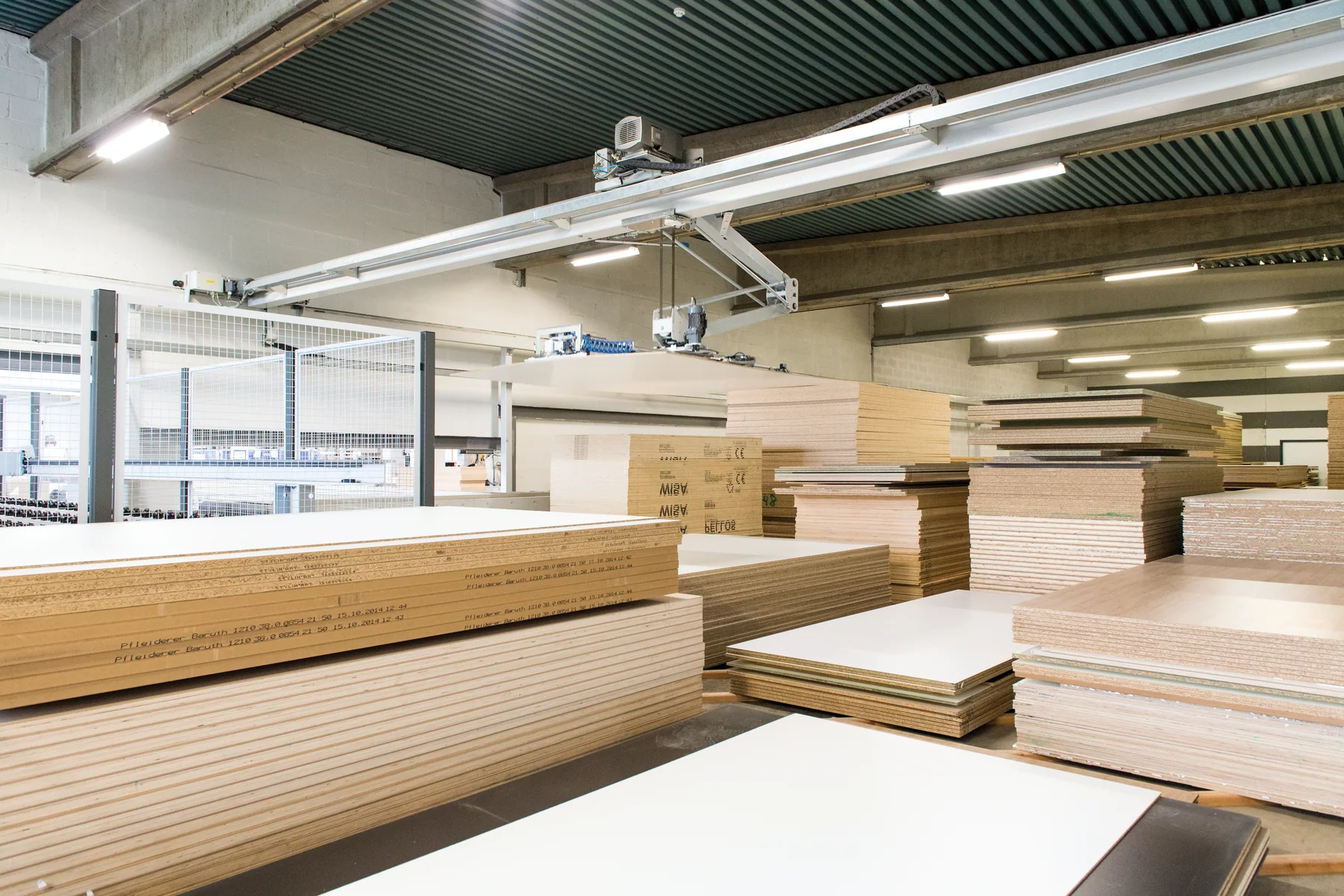
Panel materials, stock and offcuts
How are materials ordered, stored, selected and retrieved? Which offcuts are genuinely reusable, and how are they returned to the workflow?
Planning and internal communication
Who determines the priorities? Where is the current order status? How are changes and shortages communicated?
Internal logistics
How much movement is required between panel storage, beam saw, CNC, edge banding, assembly and dispatch? Where do bottlenecks arise?
Operations and figures
What information does the business owner need to assess capacity, costs, profitability and investments more effectively?
From findings to a practical action plan
An analysis is only valuable when you know what to do with it. That is why we translate our findings into clear priorities.
Depending on the assignment you will receive:
- an overview of the current processes;
- the most important bottlenecks and risks;
- a distinction between quick improvements and larger projects;
- concrete recommendations per process step;
- a proposal for sequence and responsibilities;
- considerations for software, machines, people and training;
- guidance during implementation when desired.
We do not automatically recommend purchasing new software or machines. First we look at what can be better organized with the existing resources.
This is how an advisory process works
1. Getting to know you
We discuss your question, the context and what you have already tried.
2. Observe and interview
We look at the relevant processes, speak to involved employees and monitor where information, material or time is lost.
3. Organise and prioritise
We connect causes and effects. Not every problem requires the same investment or the same urgency.
4. Decide and implement
You receive a practical action plan. You then decide which steps to handle internally and where further guidance would help.
Discuss your challenge

Explore at your own pace
7 success factors for interior fit-out companies
A practical guide for business owners who want to assess their organisation, production, people, investments and profitability critically.
View the ebookFrom 2D to virtual reality – The future of furniture making
A look at how digital design, visualisation and production automation are changing the work of furniture makers and interior fit-out professionals.
View the ebookSoftware is a tool, not a panacea
KORPUS and AutoFIT can remove many manual steps, but only when the surrounding processes are clear. An inefficient material flow, unclear scheduling or a poorly managed library is not solved automatically by another licence.
We therefore always consider how the following work together:
- software;
- machinery;
- data;
- employees;
- material;
- planning;
- shop-floor procedures.
Only when these elements are aligned do you get a workflow that continues to work on busy days.
What is holding your company back today?
Tell us about your challenge. Together, we determine whether a focused analysis, a broader consultancy project or another first step makes the most sense.
Schedule a consultationAsk your questionNo generic report—just close attention to your people, machinery and way of working.